
Discover: Who Was Ansel Adams? The Life Of The Legendary Landscape Photographer
Adams is indisputably one of the greatest photographers of all time, and certainly the most recognized black-and-white landscape photographer. How did Adams become such a brilliant success? In this blog, I discuss why Ansel Adams is still remembered today, his sources of artistry, and why he personally inspires me.
Adam’s early life
Adams was born in San Francisco in 1902 and lived most of his life in California. His childhood home sat near the Seacliff neighborhood in San Francisco. He enjoyed countless hours in nature, exploring the nearby forest and creek, beach cliffs, and, of course, the ocean.
Growing up, Adams was inattentive and fidgety in school. Every moment, he yearned for nature and loathed being stuck in a classroom. I’m not sure about you, but I definitely relate. His parents pulled him from school at the age of twelve, and he continued his education under the teaching of his father and private tutors. So, from an early age, he received a flexible, but classical, education. I’m not sure about you, but I definitely don’t relate.
Adams excelled at piano under the guidance of excellent tutors and mentors. He developed his musical talent, growing a profound appreciation of musical composition. For years, he thought he might become a professional pianist. Eventually, he realized that, although he could make a living through teaching piano, he wasn’t a musical genius. Instead, Adams turned out to be a genius in another area of creativity: photography.

Ansel Adam’s early photography
At fourteen, he was exposed to photography (no pun intended). A family friend gifted him a camera, and Adams took it on a family vacation to Yosemite National Park. It would remain one of his favorite places on earth. He recalls the place’s majesty in his autobiography: “The splendor of Yosemite burst upon us and it was glorious.... One wonder after another descended upon us.... There was light everywhere.... A new era began for me.” From that majestic encounter on, his passion for natural photography soared.
Once he committed to becoming a full-time photographer, his career took off. In 1925, he rejected the most common style of photography, pictorialism, which focused on trying to mimic painting techniques and altering the final images. He earned a large commission for his first portfolio, containing his famous grand, imposing black and white photograph entitled, Monolith, the Face of Half Dome, Yosemite National Park, California.
Adams almost exclusively captured black-and-white photographs for the rest of his life. He wrote in his autobiography, “I have no doubt that I will continue to make photographs till my last breath.” He died in 1984, at the age of 82.

Adam’s influence in the photography world
Throughout his life, Adams helped develop photography as an art form in and of itself, developing a novel style called “pure photography.” “Pure photography,” he writes, “is defined as possessing no qualities of technique, composition or idea, derivative of any other art form.” He founded a photography group called “f/64” that focused on this novel style.
In addition to the visionary images he personally captured, he influenced the world of photography in other ways.
- In large part due to his influence, landscape photography became accepted as a legitimate form of fine art.
- Helped develop the “zone system” for measuring and managing photographic processes, publishing “a series of influential technical manuals.”
- As we mentioned, he helped to invent “pure photography.”
- Adams helped instill a sense of environmental activism through his capture of beautiful and grand scenes of nature. For this reason, President Carter awarded him the medal of freedom.
Adams allowed his art to speak for itself, inspiring environmental activism and the creation of more national parks and wildlife preservations. His Presidential Medal of Freedom includes the following praise: “At one with the power of the American landscape, and renowned for the patient skill and timeless beauty of his work, photographer Ansel Adams has been visionary in his efforts to preserve this country's wild and scenic areas, both on film and on earth.”
How Adams inspires my art
Adam's creative insight draws from his classical education, childhood immersion in nature, and musical awareness. In other words, he draws from many creative sources, something I aspire to as well. Adams had a way with words. He said of photography,
“You don't take a photograph, you make it. No man has the right to dictate what other men should perceive, create or produce, but all should be encouraged to reveal themselves, their perceptions and emotions, and to build confidence in the creative spirit.”
- Ansel Adams
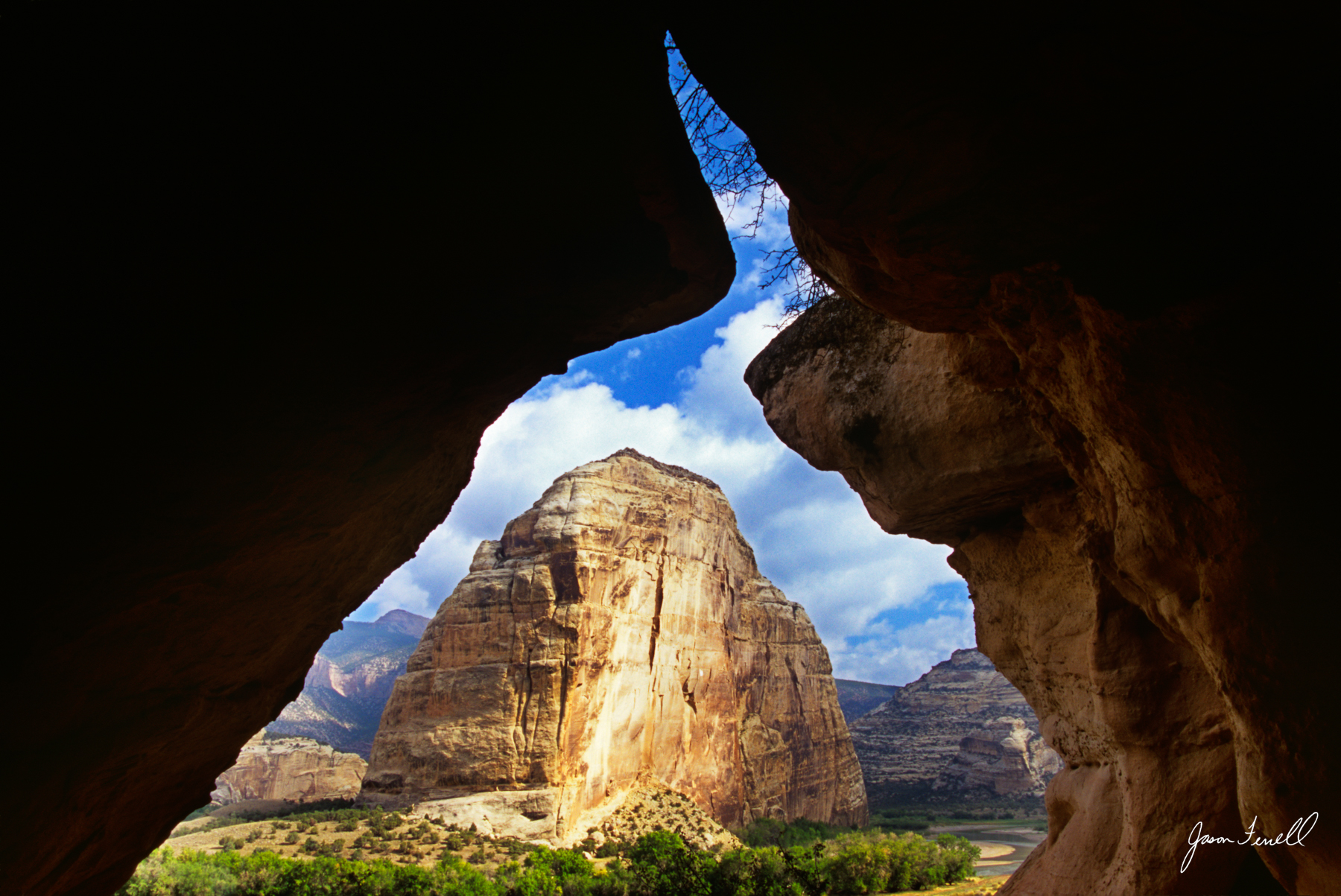
Returning to the wonder of childhood would serve artists well. It certainly invigorates me. Adams agrees, writing, “I constantly return to the elements of nature that surrounded me in my childhood, to both the vision and the mood.” Hopefully, Adam’s life serves to inspire you as he has inspired me. Landscape photography is like a portal into nature, reminding us of the raw, beautiful wilderness beyond our everyday drudgery (like writing blogs). Like Adams, I believe art unfolds the human spirit, and I love when my landscape pieces tie together with a memory.
Although Adams didn’t use color in his best art pieces, I, personally, enjoy the expressiveness of the natural world’s vibrant colors. I sell large wall art pieces on all kinds of printing mediums. I hope my art inspires you to enjoy the wild and wonderful natural world.

