
Discover: The Most Photogenic Plants: A Photographer's 4 Favorite Blossoms
Every photographer and enjoyer of fine art has their own tastes. These are highly subjective, but we also garner inspiration from others’ suggestions. These four blossoming plants have given me a wealth of artistic inspiration and aesthetic appreciation, and I want to share it with others.
I’ve taken fine art photos of Japanese maple trees and bluebonnets in Texas, but I still, one day, hope to artistically capture Lupines and Lavender fields to my satisfaction. Hopefully, you’ll not only enjoy the fine art photography of these four flowering plants, but also be inspired to take your own pictures, and learn a few things about these wonderful treasures in nature.
Japanese maple trees
Acer Palmatum, the scientific name for Japanese Maple, refers to its hand-shaped leaves (Palmatum meaning hand-like). The Japanese name, Momiji, also apparently means “baby hands.” Japanese Maples are native to China, Korea, and Japan, but now exist all over the world, widely admired for their stunning leaf colors, blooms, and cultivation value.
“Cultivars” refer to species which are purposefully propagated to bring out certain features, like bark texture, leaf color, leaf shape. There are over 1,000 cultivars of Japanese Maples. As such, Japanese Maples may present dark, wine-colored leaves, mixtures of orange and yellow, pink and white leaves, bright-green bark, and more. Japanese gardeners have cultivated various kinds for centuries. They’re also a common plant to cultivate bonsais with. Some are “dwarfs,” some grow to be massive.
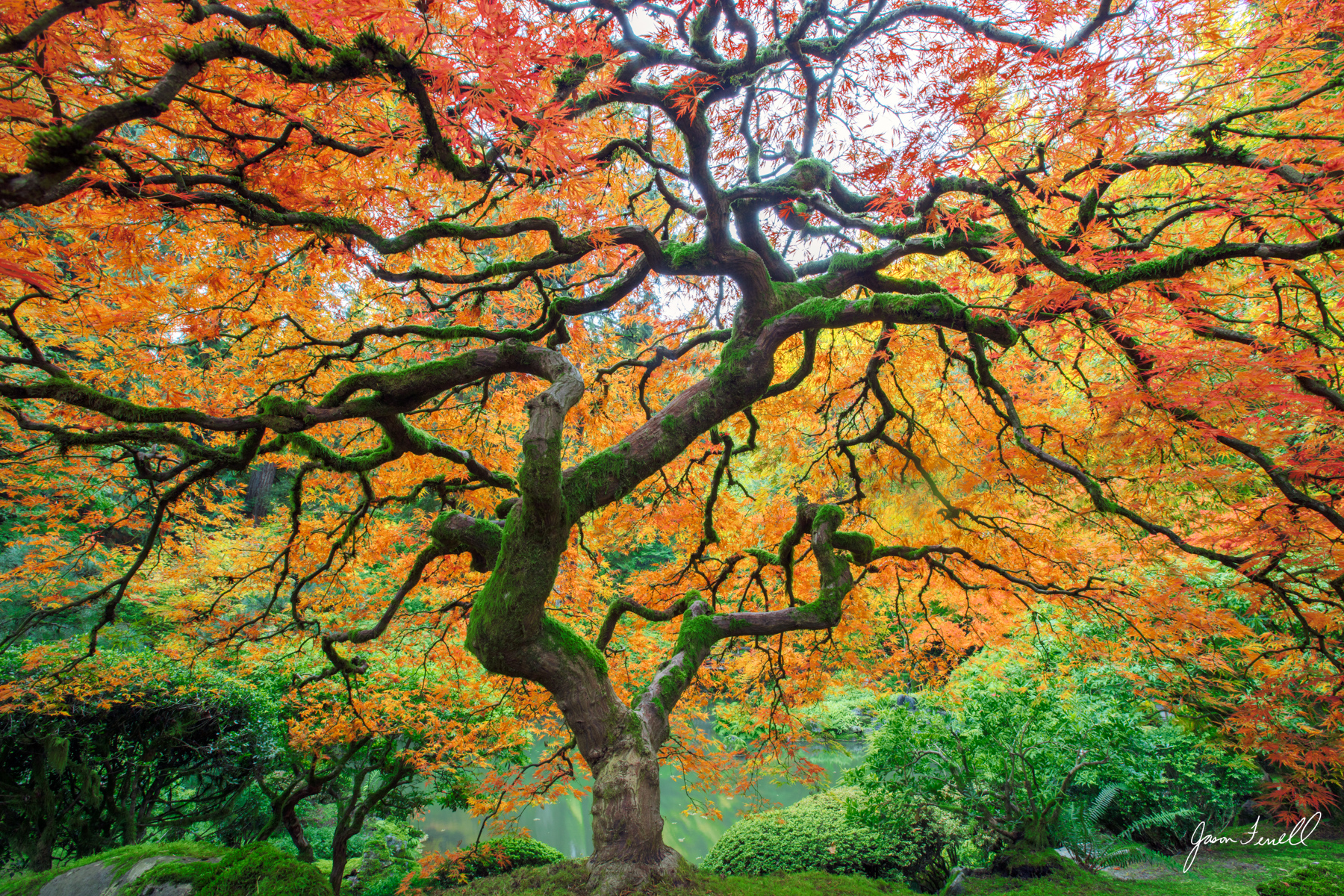
They blossom in Spring, and usually turn deep oranges and reds in Autumn. More than that, they are known for their ornamental stems, meaning even without leaves, in the winter, they are aesthetically pleasing and a sought-after plant for gardens the world over.
One of my favorite places to admire them is in the Kubota Garden, a 20-acre Japanese garden in the Rainier Beach neighborhood of Seattle, Washington.
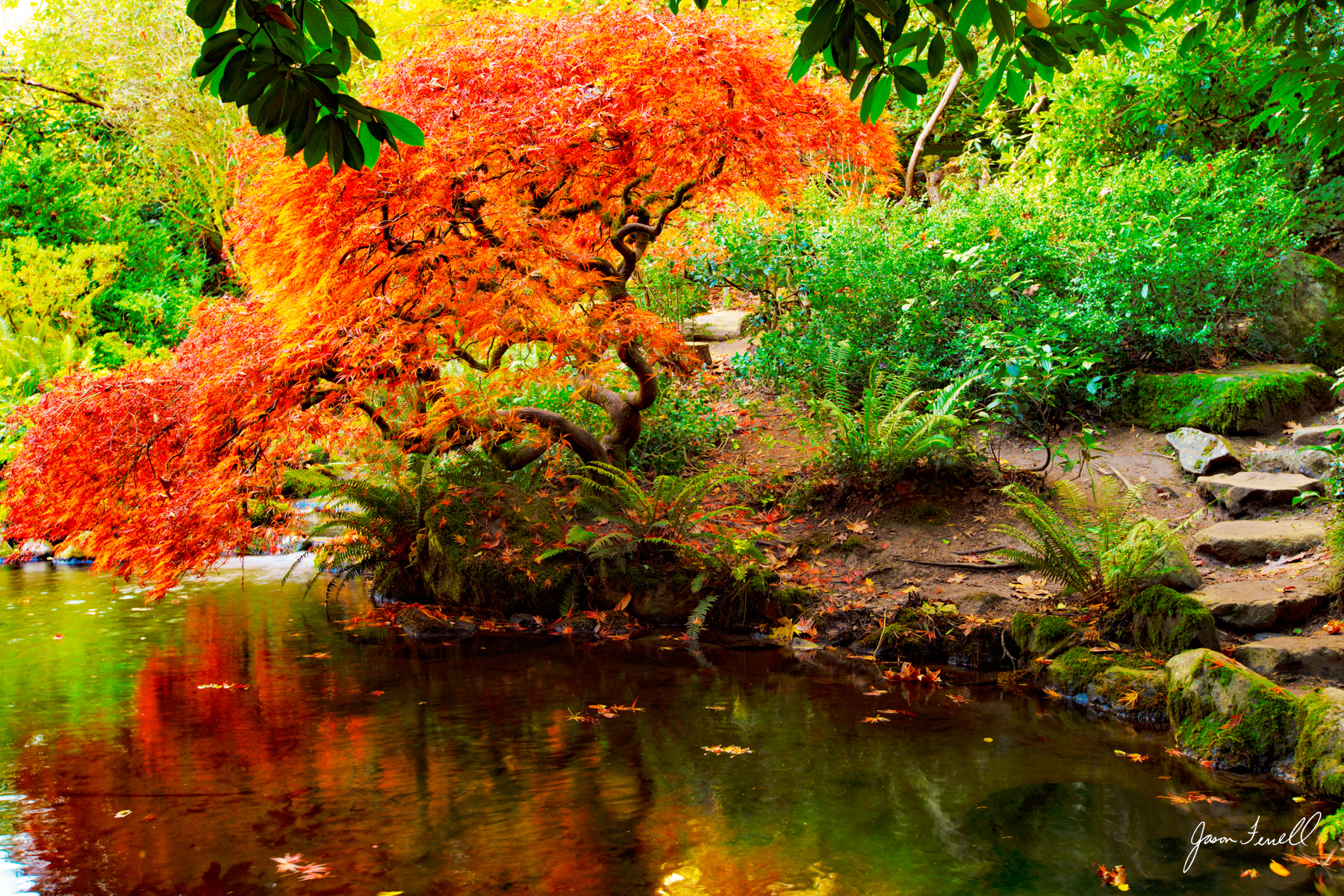
Japanese Maples are one of the most various, richly beautiful, and easily accessible, as they’re a popular addition to public gardens and parks.
Bluebonnets
Bluebonnets, so called for their flowers shaped like the hats of pioneer women, are perhaps my favorite flower. (They’re the official flower of my home State, Texas, so I might be biased.) The bluebonnet’s genus name is Lupinus, which I’ll reference again.
Bluebonnet blooms are native to the US southwest, and can be found scattered throughout public land—particularly along highways. Due to the Highway Beautification Act, led by the First Lady “Lady Bird” Johnson, in 1965, Texas highways now often feature endless fields of bluebonnets. It’s not uncommon to see Texas visitors stopping to take pictures with the famous, purple-blue blooms.
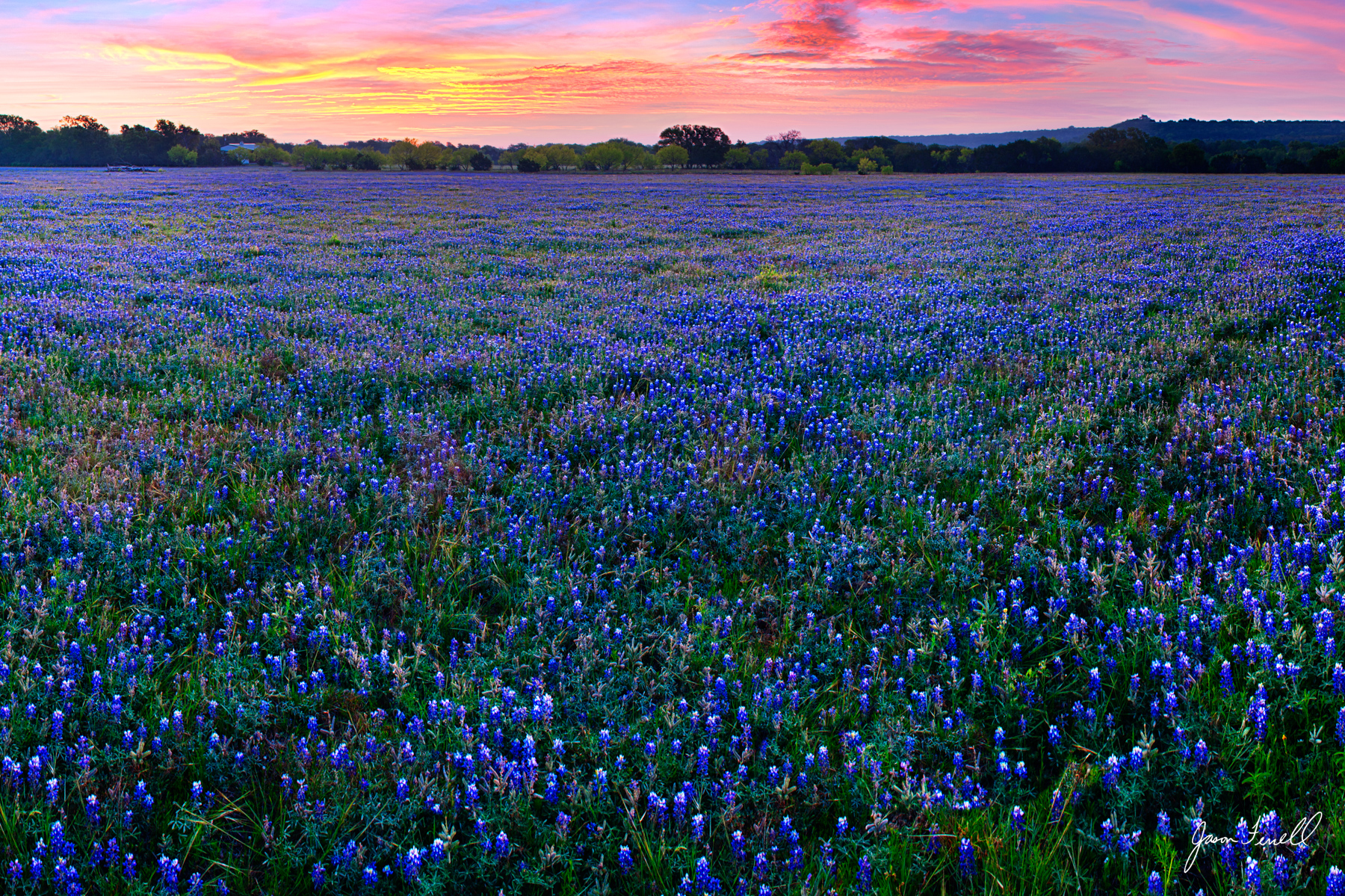

Interestingly, the Texas state flower used to refer only to the species Lupinus subcarnosus, but a slightly different species, Lupinus texensis, was the favorite of many Texans. So, in 1971, Texas decided that any species of Lupinus found in the region would count as the State flower.
However, there are countless other Lupinus species blossoming across the globe, which can look quite different from the ones found in Texas.
Other Lupines
Lupines, or Lupinus, is the genus which bluebonnets are from, more generally can live all over the world. There are around 200 species, including clusters of them in North and South America. North Africa and the Mediterranean also boast a range of diverse Lupines. Some species are shrubby, growing quite tall.
Since I haven’t captured these magical plants—yet—I’ll show a generic photo of them.

Some common varieties for gardens include:
- Lupinus arboreus, an evergreen shrub with beautiful cone-shaped towers of blooms.
- Lupinus “The Pages” with dark maroon flowers, has stalks reaching around four feet.
- Lupinus “Russell Hybrids Mixed” are a hybrid of species with a range of mixed colors, as a result.
I’m partial, however, to Lupinus perennis, or wild Lupine. They’re a little more delicate and more sparsely flowered, and occur naturally in the wild. They often go by the name of old maid’s bonnets, a call back to the region-specific name of certain species—bluebonnets.
Lavender
Lavender (Lavandula) has nearly 50 known species, and are usually native to Eurasia and Africa, but mostly live in warmer climates in Eurasia. They have many uses. They’re an ingredient in medicines, oils, soap, and cosmetics. The ancient Egyptians used them for perfume, and the Romans used them to dress battle wounds.
Aside from their many uses, ancient to modern, they are simply beautiful. More than just the individual bushes or flowers, fields upon fields of lavender farms are jaw-droppingly gorgeous. They’re like an impressionistic painting brought to life.

In particular, I’d love nothing more than to capture the famous lavender fields of Provence, France. The rich purple hues blanket the idyllic hillsides, drawing people from across the world to experience their majestic colors. It’s a dream of mine to visit and capture the ethereal, dream-like fields.
Four plants perfect for art
These four plants, to me, represent a wealth of beauty and wonder in nature. Their colors and shape work perfectly as ornamental plants, in gardens, and illustrate the splendor of wildernesses. Nature never ceases to amaze me.
Contact me about purchasing fine art prints of "Dreamcatcher," “On Golden Pond,” “Field Of Bluebonnets,” “Bluebonnet Lane,” all featured in this blog. As an independent, fine art photographer, I sell all my art directly to you. You’re welcome to peruse my other galleries. Your support goes toward my artistic dream to travel with my family and capture the magnificence of nature. If you want to see my eventual photos of lavender and Lupine fields, follow me on socials and join my VIP club.
